


Have students read just the first article and “Malaria Milestones.” Work together with them to pick out five items they could put on a timeline.
Back to Teacher View
Student View
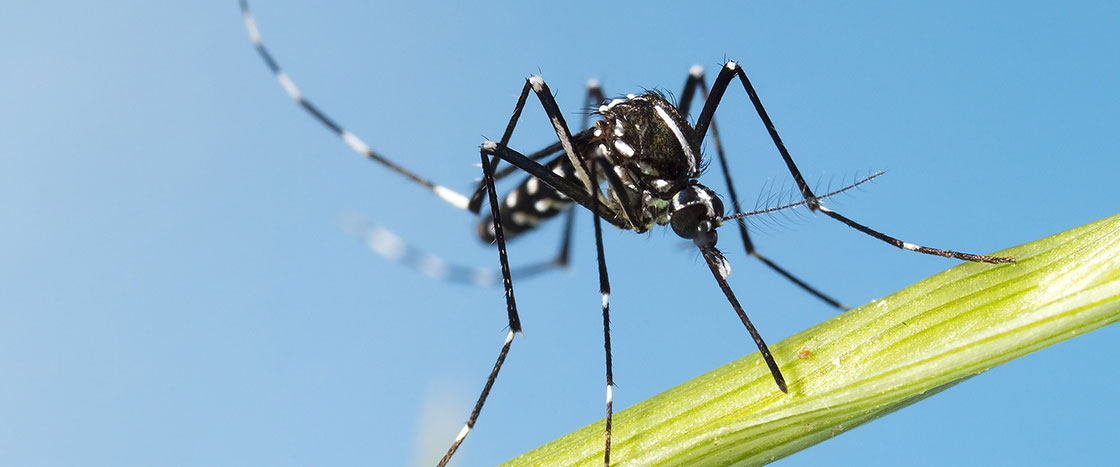
The Deadliest Animal on Earth
This information-packed feature includes an article about how mosquitoes harm people, a text about the eradication of malaria in the U.S., and a pictorial sidebar on malaria history.
Learning Objective: Students will synthesize information from three texts about mosquitoes and malaria.
Lexile: 900L-1000L
Guided Reading Level: U
DRA Level: 50
Featured Skill:
Synthesizing,
Other Key Skills: vocabulary, close reading, text features, key details, main idea, inference, informational writing
Standards
Audio
()
Activities
(8)
Download All Activities
Core Skills Workout
Skills Activities
Quizzes
(2)
Quizzes
(2)
More About the Story
Skills
vocabulary, close reading, text features, key details, main idea, inference, informational writing
Complexity Factors
Purpose
“The Deadliest Animal on Earth” explains how mosquitoes spread malaria and why the disease is such a serious problem. “How America Beat Malaria” discusses America’s use of DDT in the mid-20th century.
Structure
Both texts include cause-and-effect and compare-and-contrast structures. “The Deadliest Animal on Earth” has a sidebar.
Language
The texts contain challenging academic and domain-specific vocabulary, such as tormented and thrive.
Knowledge Demands
The texts include statistics and refer without explanation to four-ton hippos, medieval warriors, Navajo chiefs, and more.
Step-by-Step Lesson Plan
1. Preparing to Read
Preview Text Features / Set a Purpose for Reading (20 minutes, activity sheet online)
- Have students look at page 15 then turn and talk to a neighbor about which animal they think is deadliest, and why. Invite pairs to share their ideas with the class.
- Direct students to turn the page. Ask: Are you surprised that it’s the mosquito? How might this insect be deadly?
- Point out the three pieces included in the package: the main article, the informational text, and the picture sidebar. Give students a moment to look them over.
Introduce Vocabulary
- Project or distribute the vocabulary activity to introduce challenging words students will find in the texts.
- Highlighted words: tormented, menace, ancestors, thrive, gorges, vaccine, insecticide
2. Close Reading
Read and Unpack the Text (45 minutes, activity sheet online)
Read the main article as a class. Then go back and call on students to read aloud the informational captions in “Malaria Milestones.” Put students in groups to answer the close-reading questions.
Have them stay in groups to read “How America Beat Malaria” and discuss the close-reading questions. They should then discuss the criticalthinking question.
“The Deadliest Animal on Earth”
- Why do you think page 15 features pictures of a lion, a cobra, and other threatening animals? (text features) These pictures make readers think of various ways animals can be dangerous, so it is surprising to find out that the smallest—the mosquito—is the deadliest of all.
- How does the tiny mosquito kill almost 750,000 people per year? Why is this number different from the 440,000 people mentioned on page 18? (key details) Mosquitoes spread deadly diseases from person to person. They spread malaria mostly. Of the 750,000 who die each year, 440,000 are killed by malaria and the rest die of other diseases spread by mosquitoes.
- Reread the section “An Ancient Problem.” What is the main idea of the section? (main idea) The main idea is that mosquitoes and malaria have been sickening humans for hundreds of thousands of years.
- Reread the section “ ‘Blood Feed.’ ” Explain how mosquitoes spread malaria from person to person. (key detail) A female mosquito bites a person with malaria, filling itself up with the person’s blood. A few days later, it bites another person, and the malaria germs are transmitted to that person.
- Reread “Some Progress.” What group of people is most likely to die from malaria? Why? (inference) African children under the age of 5 are most likely to die from malaria. You can infer that this is because the children live in crowded areas of poor countries that lack medical care.
"Malaria Milestones"
Close-Reading Questions
- Which pictures and captions in this feature show that malaria has long been a problem? (text features) The pictures of the mummy and the sweet wormwood plant, and their captions, emphasize that the disease goes back thousands of years.
- What are two ways people are trying to prevent malaria today? (text features) People are using bed nets coated with insecticides, and scientists are trying to create an effective malaria vaccine. “
- What did the United States do to wipe out malaria? (main idea) The U.S. widely sprayed DDT, especially in the South, to kill mosquitoes. • If DDT has effectively controlled malaria in the U.S., why has it been banned here and in most countries? (key detail) DDT was found to kill not only mosquitoes, but birds and other insects too. It also causes health problems in humans.
Critical-Thinking Question
- Based on these three texts, why has malaria been a terrible problem for humans for so long? (synthesizing) People have been getting malaria for 500,000 years. Although some solutions have been found, none work for everyone. DDT helped in the U.S., but it caused other serious problems. Bed nets help but don’t get rid of the disease. So far, scientists have not come up with an effective vaccine. Poverty is one of the main reasons malaria continues to spread.
3. Skill Building
Featured Skill: Synthesizing
Have students read the “What’s the Connection” box on page 19. Distribute our synthesizing activity, which will help them gather information from the texts to create their timelines.
 Differentiate and Customize
For Struggling Readers
For Advanced Readers
Ask students to find out what they should do to protect themselves if they were to travel in a part of the world where malaria exists. Have them write an informational text explaining what they learned.
Text-to-Speech